The Sound Dog – WordPress Website Redesign, Consolidation & SEO Optimisation
Client
The Sound DogServices
Location
United KingdomTimeline
2026Tech Stack & Tactics
Build Specs
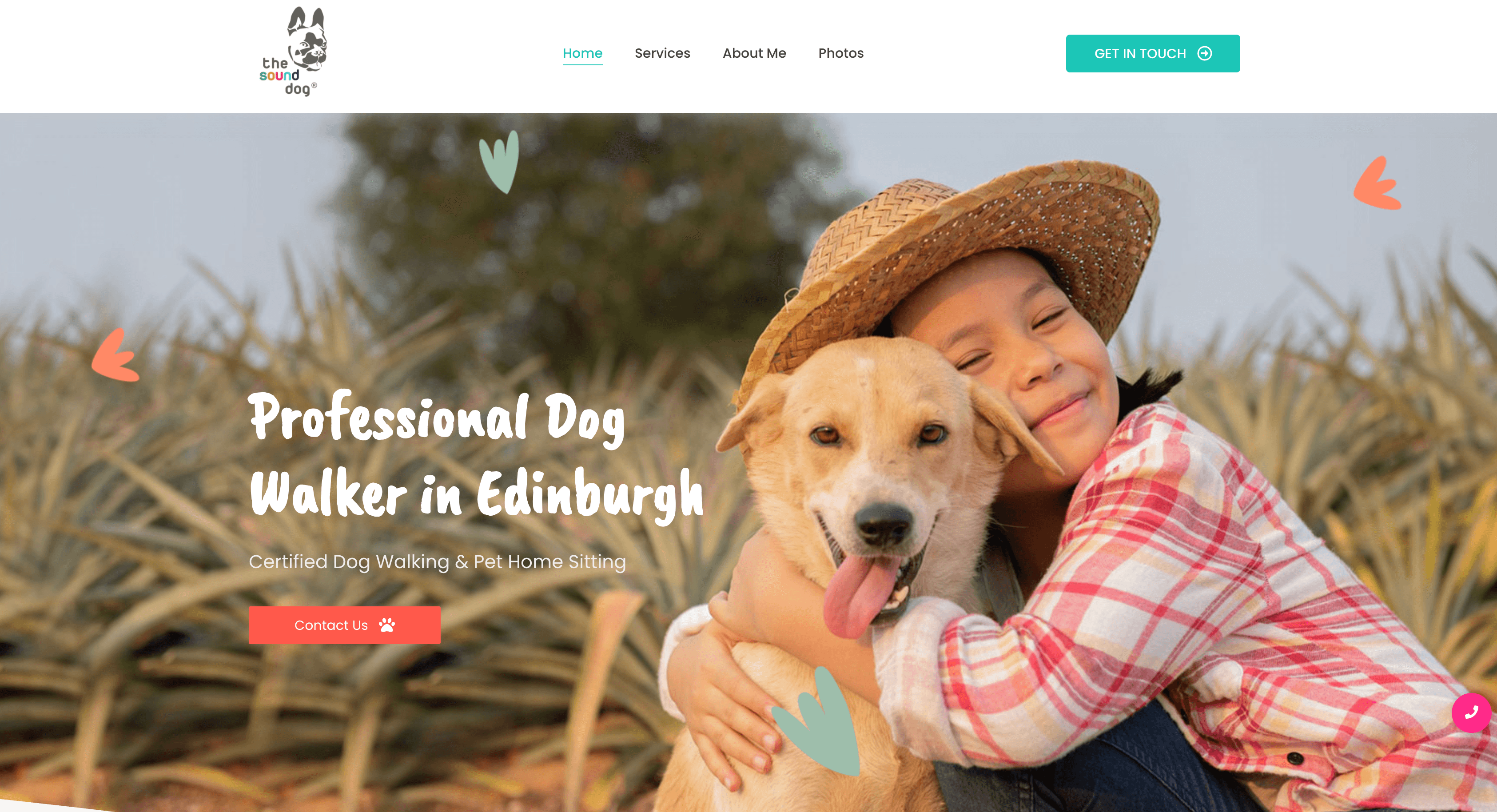
How The Sound Dog consolidated two duplicate websites into one modern WordPress platform, resolving overlapping domain issues while improving design, content management, search visibility, conversion journeys, performance and long-term website maintenance.
The Challenge
The Sound Dog previously operated two separate websites across its .co.uk and .com domains.
Both websites contained largely identical pages and content, but existed as separate WordPress installations on different domains.
This created several operational, technical and search-related problems.
Updates had to be considered across two websites rather than one central platform. Changes to content, services, plugins or design could become inconsistent, while maintaining duplicate installations increased the amount of ongoing technical work required.
From an SEO perspective, the two websites also presented substantially similar content to search engines under different domains.
This meant both sites could compete for the same searches while making it less clear which domain should be treated as the primary version.
Potential issues included:
The existing websites were also visually dated and no longer represented the quality or professionalism of The Sound Dog’s services.
Some elements of the WordPress installations, including themes and plugins, had become outdated. This created avoidable maintenance, compatibility, performance and security concerns.
The website structure also needed improvement from a conversion perspective.
Visitors required a clearer understanding of:
The project therefore required more than a visual redesign.
The objective was to consolidate the two websites into one authoritative platform while rebuilding the user experience, content structure, technical foundations and search presence.
The Solution
We planned and delivered a full WordPress website redesign and consolidation project centred around one primary domain.
The new platform combined the strongest and most relevant content from the existing websites into a single modern, manageable and search-optimised website.
The project covered domain consolidation, website redesign, WordPress maintenance, content restructuring, technical SEO, on-page optimisation, conversion rate optimisation, plugin and theme updates, performance improvements, and long-term content-management usability.
1. Consolidating Two Duplicate Websites
The first priority was to replace the duplicate .co.uk and .com websites with one clear primary platform.
We reviewed the existing pages, URLs and content to establish which domain should remain primary, which pages needed to be preserved, which duplicate pages could be merged, which content was outdated, which URLs had existing value, and how visitors and search engines should be redirected.
Rather than continuing to manage two identical installations, the new structure centralised The Sound Dog’s website presence.
The secondary domain could then be redirected to the corresponding pages on the primary website, preserving a clear route for existing visitors while consolidating signals around one preferred domain.
This reduced duplication and created a more coherent digital presence.
2. Full Website Redesign
Every key page was redesigned to create a more modern, professional and consistent user experience.
The new design introduced clearer page hierarchy, improved typography, stronger visual spacing, consistent calls to action, better use of imagery, more structured service information, responsive layouts, and a clearer navigation system.
The redesign was not treated as a simple visual reskin. Each page was reviewed according to its purpose, intended visitor and desired next action.
This allowed us to improve both the visual presentation and the way users move through the website.
3. WordPress and Elementor Rebuild
The website remained on WordPress to provide The Sound Dog with a familiar and practical content-management system.
Elementor was used to create flexible page layouts that can be updated without requiring ongoing development work for every content change.
The WordPress build was organised to make routine management easier, including editing page content, replacing images, updating service information, creating new sections, publishing new content, and maintaining calls to action.
Reusable design elements were introduced to reduce inconsistency and make future page creation more efficient.
4. Plugin and Theme Maintenance
The existing installations contained outdated themes, plugins and supporting components.
We reviewed the WordPress environment and updated the website’s technical foundations.
This included updating WordPress core, updating active plugins, updating the theme and associated components, removing unused plugins, removing unnecessary themes, reviewing duplicate functionality, resolving compatibility issues, and reducing avoidable technical clutter.
Removing unused components helped simplify the website and reduce the number of potential maintenance and security concerns.
5. Website Cleanup and Technical Improvements
Legacy WordPress websites often accumulate unnecessary content and technical residue over time.
We cleaned the installation by reviewing unused pages, outdated drafts, redundant media, old templates, unnecessary scripts, inactive plugins, duplicate content, legacy styling, and obsolete functionality.
The cleanup reduced unnecessary complexity and ensured that the new website was not simply layered on top of years of unused components.
6. SEO-Focused Domain Migration
The consolidation required careful handling to avoid losing the value attached to existing URLs.
We created a redirect strategy mapping relevant pages from the secondary domain and legacy website structure to the most appropriate destinations on the primary domain.
The migration work considered one-to-one page redirects where suitable, consolidated replacement pages, removed or obsolete content, preferred canonical URLs, internal link updates, metadata, sitemap configuration, and indexation controls.
Rather than leaving duplicate pages accessible across both domains, the project brought the website’s authority and content together under one structure.
7. On-Page SEO Optimisation
The existing website content was reviewed and improved to better reflect how potential customers search for The Sound Dog’s services.
We optimised page content around service intent, customer requirements, relevant terminology, page hierarchy, internal linking, headings, metadata, and calls to action.
Important pages were given clearer individual roles so that multiple pages were not unnecessarily competing for the same terms.
8. Content Restructuring and Optimisation
Some existing information was useful but required clearer organisation and presentation.
We reviewed and refined the content to remove repetition, improve readability, clarify service descriptions, strengthen page introductions, improve calls to action, divide long sections into manageable content blocks, and guide users toward relevant next steps.
The new copy and page layouts balance search optimisation with usability.
9. Conversion Rate Optimisation
The previous websites did not provide a sufficiently clear route from initial interest to meaningful action.
We reviewed the customer journey and redesigned pages around stronger conversion principles.
This included clearer primary calls to action, improved placement of enquiry routes, more direct service explanations, reduced distractions, better navigation, stronger trust signals, clearer contact options, and more consistent messaging.
10. Responsive Mobile Experience
Every page was redesigned and tested for mobile, tablet and desktop use.
The new mobile experience includes simplified navigation, readable typography, optimised spacing, appropriately sized buttons, responsive images, clear content ordering, and accessible contact actions.
11. Performance and Image Optimisation
The website was reviewed for unnecessary page weight and inefficient assets.
Performance work included image compression, appropriate image sizing, removal of unnecessary scripts, reduced plugin overhead, cleaner page structures, improved caching, and more efficient asset delivery.
12. Improved Content Management
A core requirement was ensuring the redesigned website remained manageable after launch.
The new WordPress setup gives The Sound Dog the ability to update key content without rebuilding pages from scratch.
The Results
The project transformed The Sound Dog’s online presence from two competing and substantially duplicated websites into one modern, consolidated and conversion-focused platform.
Key improvements include:
- One Authoritative Website: The .co.uk and .com websites were consolidated around one primary platform, removing the need to manage two duplicate installations.
- Reduced Duplicate Content Risk: Duplicate pages across separate domains were addressed through consolidation, preferred URLs and planned redirects.
- Consolidated Search Signals: Website content, internal links and domain authority can now support one primary website rather than being divided across competing versions.
- Complete Visual Redesign: All key pages were redesigned with a modern, consistent and professional presentation.
- Improved User Journeys: Visitors can understand services more easily and move toward relevant contact actions with less friction.
- Stronger Conversion Structure: Calls to action, service messaging and enquiry routes are positioned more clearly throughout the website.
- Updated WordPress Environment: WordPress core, themes and plugins were reviewed and updated to provide a cleaner and more maintainable technical foundation.
- Reduced Technical Clutter: Unused plugins, themes, templates and outdated content were removed or consolidated.
- Improved Search Optimisation: Page structure, metadata, headings, content and internal linking were refined around clearer search intent.
- Easier Content Management: The Elementor-based WordPress build allows The Sound Dog to maintain and expand its content through a practical visual editing system.
- Improved Mobile Experience: Pages now provide a more accessible and responsive experience across mobile, tablet and desktop devices.
- Better Performance Foundations: Images, page structures, scripts and plugin usage were reviewed to improve loading efficiency.
- Scalable Website Structure: The new platform can support additional services, project content and future search-focused pages without recreating the website.
The Sound Dog now has a single, coherent website that is easier to manage, clearer for visitors and better positioned for search visibility and future growth.
By combining domain consolidation, modern WordPress development, SEO optimisation and conversion-focused content improvements, the project replaced two outdated duplicate websites with one stronger and more effective digital platform.
Want a website like this?
Get in touch with us to discuss how we can build a fast, secure, and fully optimised website for your business.